Coconut Marlet News 19th October 2026
October 18, 2026
Join us on Stand 5B R412 SIAL Paris, today and 20th October The Philippine coconut market remained under…

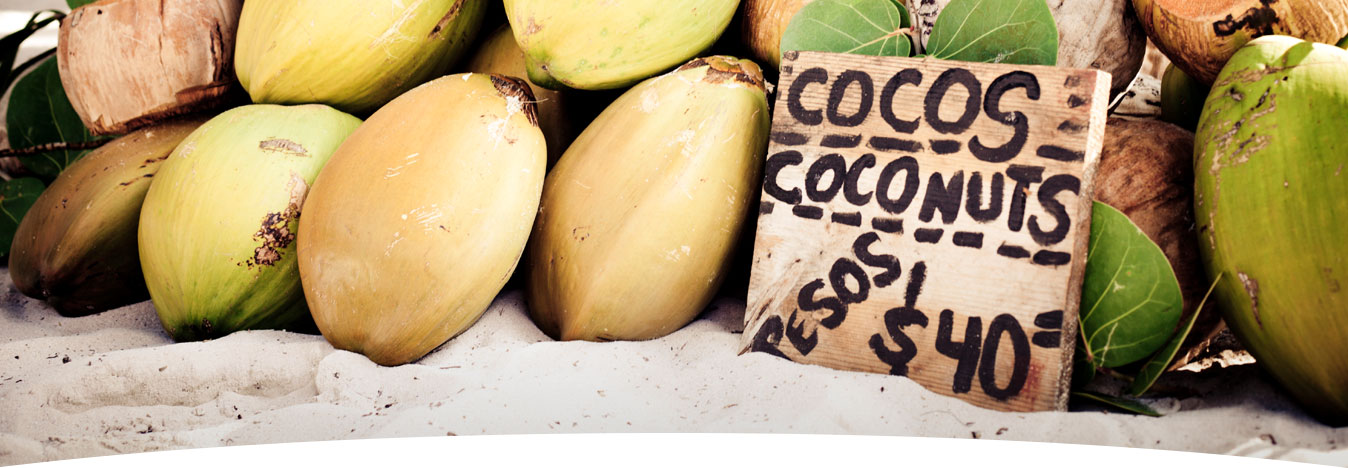
The Philippine copra market continued its decline from early January. PCA’s daily prices for 16 January indicate the national average millgate price at ₱61.86/kg and farmgate at ₱49.82/kg. The millgate average has decreased by ₱5.75/kg compared to last month and by ₱11.44/kg compared to the same period last year. This trend suggests that the market remains in a “lower-for-longer” phase, despite the typical seasonal tightness seen around year-end.
In the UCAP domestic yardstick (week ending 10 Jan), Quezon resecada was quoted at ₱6,505/ck (seller) and ₱6,405/ck (buyer), both ₱80/ck higher week-on-week—indicating that although PCA daily indicators declined further into mid-month, buying interest at delivery points stays selective and varies greatly by location.
Desiccated coconut: steady tone, higher-end resilience
Desiccated coconut (DC) prices remain relatively stable. UCAP’s weekly-end 10 Jan price range keeps DC between 147–190¢/lb FOB, with most forward sellers offering around 169¢/lb FOB across different destinations. Domestically, UCAP prices are about ₱5,471.50 per 100-lb bag (seller), showing a slight increase compared to the previous week.
From a supply perspective, the CATZ annual outlook explains why DC prices are “sticky” compared to oil: demand remains steady, but sourcing is increasingly impacted by unpredictable weather, strict quality standards (especially for Europe), and lengthy replenishment cycles.
Outside the Philippines, Indonesia continues to be an important swinging source: increased demand for raw coconuts (including exports to China) and an aging tree population are driving up raw material prices, while policy measures aimed at stabilising domestic supply remain an ongoing headline risk.
Coconut oil: Rotterdam eases; premium over PKO narrows
International coconut oil prices continue their decline. UCAP’s market report for the two weeks ending January 10 indicates Rotterdam offered around $2,150–2,200/MT CIF for Jan/Feb through Jun/Jul. Later, prices fell to approximately $2,100–2,175/MT CIF at the end of the period. In the nearest forward statistical data, Europe coconut oil sellers were quoted at $2,168.50/MT CIF, a decrease of $42.08/MT compared to the previous week.
The main market indicator continues to be the narrowing difference between coconut oil and palm kernel oil (PKO) premiums. UCAP indicates the spread briefly fell below $500/MT, with an average around $465/MT in the first week and $372/MT in the second week. This suggests a market where buyers are willing to wait, and where the ‘relative value” is preventing coconut oil from gaining more upward momentum.
Other edible oils: palm oil volatility feeds across laurics
Vegetable oil markets continue to be influenced by headline news. The trend of palm oil is currently affected by biodiesel policy signals and overall risk sentiment; whenever palm weakens again, it tends to limit PKO, which then restricts the premium for coconut oil. For buyers, the current market favours careful coverage: purchasing nearby needs during dips while maintaining flexibility, as policies and weather conditions can quickly change prices.
Container shipping: Asia–Europe eases, but lead times stay long
Drewry’s latest World Container Index indicates that the composite rates are decreasing again, with Asia–Europe routes showing slips: Shanghai–Rotterdam at approximately $2,763 per 40ft container and Shanghai–Genoa at about $3,839 per 40ft. Although spot prices have softened through mid-January, the industry remains cautious due to pre-Lunar New Year shipping patterns and carriers’ capacity management.
Meanwhile, transit times to major European ports remain around 6–7 weeks, as many shipping services continue to reroute via the Cape of Good Hope. This highlights that even with declining spot freight rates, working capital cycles and inventory risks stay high.
Note:The Rotterdam market is rarely used nowadays. Most transactions are handled directly by major commodities traders, typically known as ABCD—Archer Daniels Midland, Bunge, Cargill, and Louis Dreyfus, with Wilmar also being a significant player. These firms buy directly from millers in the Philippines, thus bypassing the Rotterdam market. When we refer to a quiet market, it doesn’t necessarily mean no business is being done; rather, it is just not publicly disclosed. Therefore, it shouldn’t be seen as an indicator of the market’s overall health or future direction. The UCAP in the Philippines relies on this information for its market forecasts, as it is the only available resource. We also pass this information on as part of our many information sources, noting that we do not have access to private trades beyond our own.
Why not subscribe to receive the latest market news straight to your inbox to clinch the best deal!
October 18, 2026
Join us on Stand 5B R412 SIAL Paris, today and 20th October The Philippine coconut market remained under…
October 12, 2026
Join us on Stand 5B R412 SIAL Paris, on the 19th and 20th October The…
October 5, 2026
Sustainable Coconut Roundtable in Bali We are currently at the Sustainable Coconut Roundtable 2026 in…
September 28, 2026
The coconut market presented a mixed picture this week. International desiccated coconut quotations remained stable,…
September 21, 2026
The coconut market strengthened this week, with coconut oil returning above US$2,000/MT and Philippine raw-material…
September 14, 2026
The coconut market restarts after the holidays across the European Union, with rising Philippine raw-material…
If you require technical information about our products, then please login here to access the most up to date information...
Let's take a look at this...