Coconut Marlet News 19th October 2026
October 18, 2026
Join us on Stand 5B R412 SIAL Paris, today and 20th October The Philippine coconut market remained under…

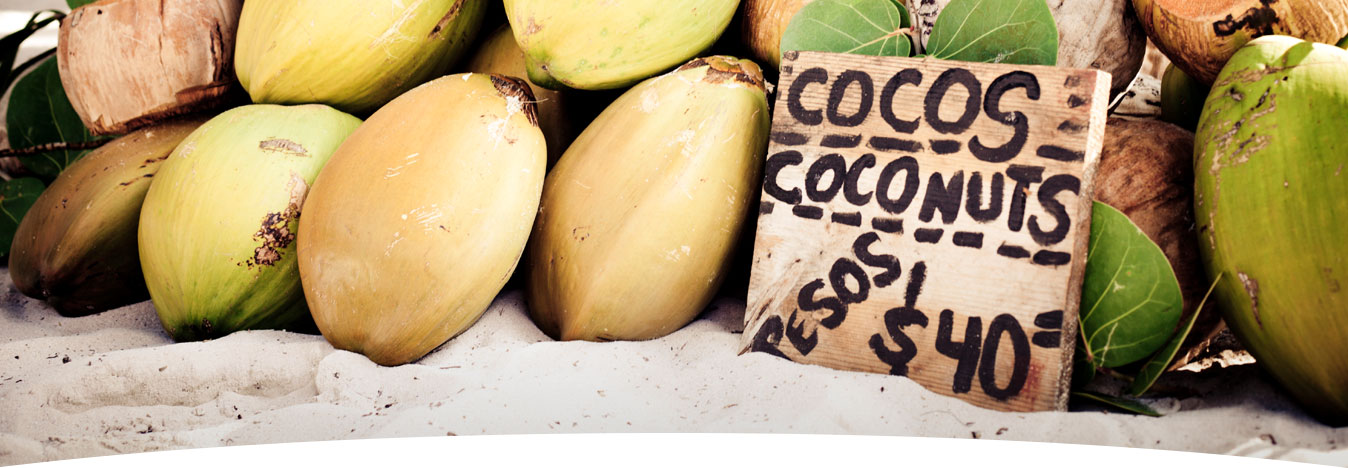
The Philippine coconut market remains under pressure, as we are seeing coconut oil and domestic desiccated coconut prices soften, despite a modest recovery in copra. Market sales are quieter and there is little forward buying despite the potential impact of an El Niño and improved origin availability weighing on prices.
Desiccated coconut is still the most stable line internationally. Export quotations were unchanged for a nineteenth consecutive week at 109–190¢/lb FOB, with UCAP’s statistical average for USA, Europe, and other destinations unchanged at 141.50¢/lb FOB. However, the Philippine domestic DC market softened again, with Manila sellers down to ₱5,446–5,748 per 100-lb bag, and the weekly average slipping ₱77 to ₱5,597/bag.
Copra recovered, but only from depressed levels. Quezon sellers moved up to ₱4,550–4,750 per 100 kg, while buyers were ₱4,450–4,650. Bicol, Visayas and Mindanao offers were higher at ₱5,050–5,100, against bids of ₱4,150–5,000. The average provincial copra price, however, remained below last week at ₱4,624.86/100 kg, versus ₱4,649.00, and far below the ₱8,004.84 average seen in June 2025. This confirms that the short-term bounce is not yet a structural reversal.
Coconut oil prices are being pulled down by the broader lauric and vegetable oil prices. Palm kernel oil fell more steeply than coconut oil, allowing coconut oil to move back to a premium versus PKO on nearby positions. Palm oil also weakened during the week, although market attention is shifting back to Indonesian biodiesel policy. Reports indicate Indonesia’s planned move toward B50 could tighten exportable palm oil availability, while stronger soybean oil and biodiesel demand have supported sentiment in competing oils.
Shipping costs remain a key landed-cost risk for European buyers. Drewry’s World Container Index for 25 June 2026 rose 5% to $4,166 per 40-ft container, its highest level since September 2024. On Asia–Europe lanes, Shanghai–Rotterdam increased 1% to $4,392/40-ft, while Shanghai–Genoa held at $5,759/40-ft; Drewry also noted limited blank sailings, showing constrained capacity.
Outlook: Desiccated Coconut export prices look well supported but stagnant, with local peso prices softer. Coconut oil has further downside risk if buyers stay away and origin availability improves, but Indonesian biodiesel policy and any palm recovery could quickly limit the decline. For Europe, freight is now the wild card: stable FOB levels may not translate into lower landed costs.
Note:
The Rotterdam market is rarely used nowadays. Most transactions are handled directly by major commodities traders, typically known as ABCD—Archer Daniels Midland, Bunge, Cargill, and Louis Dreyfus, with Wilmar also being a significant player. These firms buy directly from millers in the Philippines, thus bypassing the Rotterdam market. When we refer to a quiet market, it doesn’t necessarily mean no business is being done; rather, it is just not publicly disclosed. Therefore, it shouldn’t be seen as an indicator of the market’s overall health or future direction. The UCAP in the Philippines relies on this information for its market forecasts, as it is the only available resource. We also pass this information on as part of our many information sources, noting that we do not have access to private trades beyond our own.
Why not subscribe to receive the latest market news straight to your inbox to clinch the best deal!
October 18, 2026
Join us on Stand 5B R412 SIAL Paris, today and 20th October The Philippine coconut market remained under…
October 12, 2026
Join us on Stand 5B R412 SIAL Paris, on the 19th and 20th October The…
October 5, 2026
Sustainable Coconut Roundtable in Bali We are currently at the Sustainable Coconut Roundtable 2026 in…
September 28, 2026
The coconut market presented a mixed picture this week. International desiccated coconut quotations remained stable,…
September 21, 2026
The coconut market strengthened this week, with coconut oil returning above US$2,000/MT and Philippine raw-material…
September 14, 2026
The coconut market restarts after the holidays across the European Union, with rising Philippine raw-material…
If you require technical information about our products, then please login here to access the most up to date information...
Let's take a look at this...